
Keynote Speakers
Meet the ECP 2026 Keynote Speakers
The ECP Scientific Committee has selected the following world-renowned experts to share their research with the pathology community:
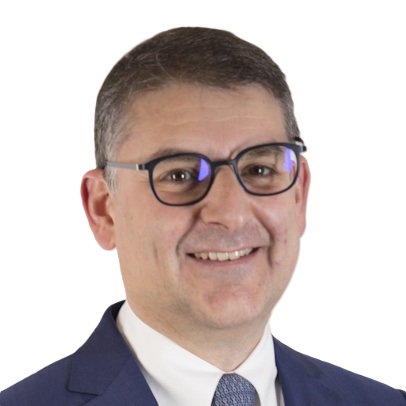
Giuseppe Curigliano, Italy
Keynote Details
Speaker Details
KNL-01 | Sunday, 13 September
11:45 - 12:30
Agnostic Approval for Cancer Treatment
Giuseppe Curigliano, MD PhD,
is the director of the Early Drug Development Division and holds the co-chair for Experimental Therapeutics Program at the European Institute of Oncology, a comprehensive cancer center in Milano, Italy. He is professor of Medical Oncology in the Department of Oncology and Hemato-Oncology at the University of Milano.
In ESMO he served as Chair the ESMO Nomination Committee (2017-2019) and as Chair of the ESMO Clinical Practice Guideline Committee (2019-2023). He was one of the founding member and served as scientific Co-Chair of the “ESMO Breast Cancer Congress”. He contributed to launch the ESMO Living Guidelines and to the recognition of the Fellow of ESMO (FESMO). He organized and participated to many professional and educational congresses for oncologists all over the world.
Professor Curigliano was identified as Clarivate™ world’s most influential researchers (the highly cited researchers) in 2022, 2023 and 2024. He has authored more than 900 papers in peer-reviewed journals (h-index 100) and many book chapters. He served as editorial board member for international journals in oncology (European Journal of Oncology, Journal of Clinical Oncology, Annals of Oncology). He is a panel member of several international breast cancer consensus conferences and has served as a chair or steering committee member for numerous national and international conferences. He trained, mentored and sponsored dozens of medical oncologists from Latin America, Africa, Asia and Italy.
Professor Curigliano was awarded with the first ESO Umberto Veronesi Award (2017) and with the Fellowship of the European Academy of Cancer Sciences in Paris (2017). He served as Editor in Chief of ESMO Open from 2022 to 2025. He is ESMO President elect.
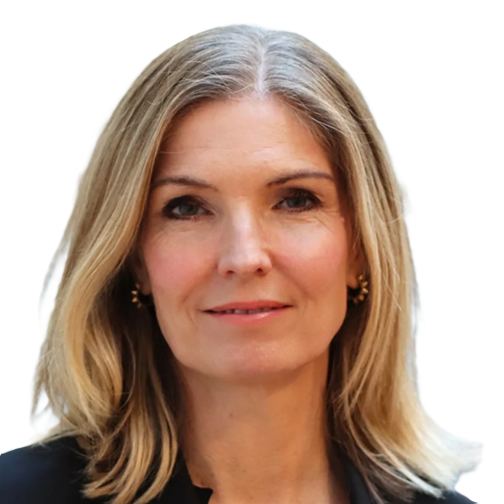
Cecilia Halle, Sweden
Keynote Details
Speaker Details
KNL-02 | Monday, 14 September
11:45 - 12:20
Challenges and Opportunities in Pathology from a Governmental Perspective
Cecilia Halle is Deputy Director-General and Head of the Division for Health Care and Pharmaceuticals at the Ministry of Health and Social Affairs in Sweden. She has extensive experience in governmental steering and both national and international policy work in the areas of health care, pharmaceuticals, health data and emergency preparedness. Cecilia represents Sweden on the Board of the European Health Emergency Preparedness and Response Authority (HERA), is the Swedish representative in the EU’s High-Level Group on Health and serves as deputy board member of the WHO Collaborating Centre for International Drug Monitoring.
Cecilia has held several managerial and senior positions within the Government Offices of Sweden, both at the Ministry of Health and Social Affairs and the Ministry for Foreign Affairs. She served as a member of the Board and Audit Committee of Systembolaget AB from 2017 to 2023. Cecilia was also the principal secretary for the government inquiry that presented Sweden’s first national cancer strategy.
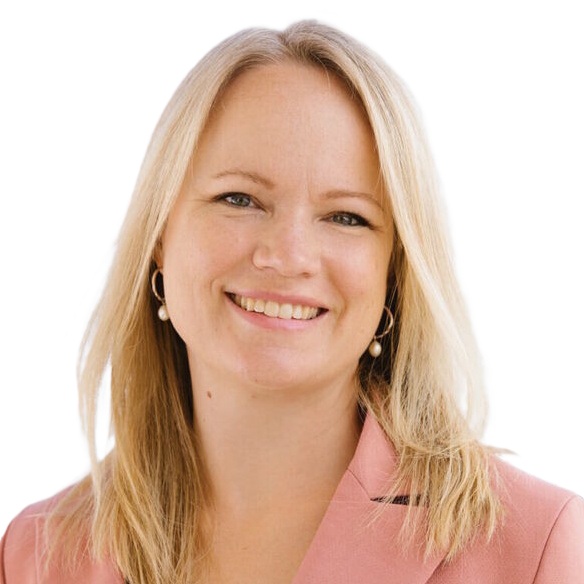
Emma Lundberg, USA
Keynote Details
Speaker Details
KNL-03 | Tuesday, 15 September
11:45 - 12:30 - ESP Symeonidis Lecture
Decoding Human Cell Architecture – from Spatial Proteomics to Cell Modelling from Images
At the interface between bioimaging, proteomics, and artificial intelligence, Emma Lundberg's research aims to define the spatiotemporal subcellular organization of the human proteome, and to build integrated models of human cells to understand how variations in protein expression patterns can contribute to cellular function and disease.
She is an Associate Professor of Bioengineering and Pathology at Stanford University. For the past 18 years, she has been a Director of the Human Protein Atlas project, creating an open-access image resource for millions of researchers worldwide. She advocates for open science and has a strong interest in science communication, both to scientific audiences and the public through innovative media. She has been secretary general of the Human Proteome Organization, and is involved in advisory roles for many cell mapping efforts such as the Human Cell Atlas consortium, UniProt db, Reactome db, Human Proteome Project and Pharma Companies.
As a token of her leadership skills, she was twice recognized as top 10 under 40 for future leaders in biopharma and omics. She is excited to continue to leverage advances in AI to build image-based spatial models of cells and be part of shaping the next era of spatial biology and pathology.
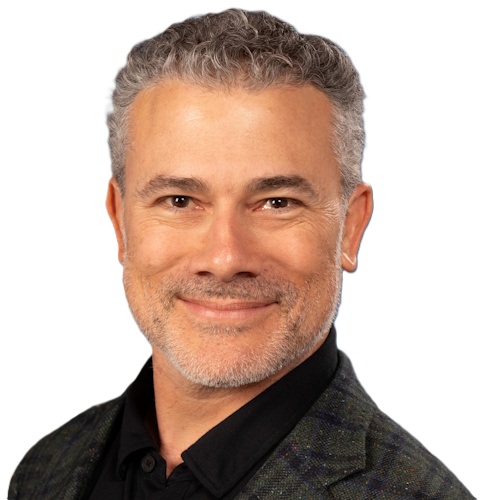
Jason Hornick, USA
Keynote Details
Speaker Details
KNL-04 | Wednesday, 16 September
16:30 - 17:15 - Juan Rosai Lecture
The Evolution of Soft Tissue Tumour Pathology
Jason Hornick is the Director of Anatomic Pathology and Immunohistochemistry and Chief of Soft Tissue and Bone Pathology at the Brigham and Women’s Hospital, Professor of Pathology at Harvard Medical School, the Mass General Brigham Endowed Cancer Chair, and a consultant at the Dana-Farber Cancer Institute. Dr. Hornick is the President of the USCAP, Vice Chair of the Soft Tissue Sarcoma Expert Panel for the AJCC, and Past-President of the Arthur Purdy Stout Society.
He was Chair of the ICCR Dataset for GIST and a member of the expert editorial boards for the 4th, 5th and 6th editions of the WHO Classification of Tumors of Soft Tissue and Bone and the Sarcoma Analysis Working Group for TCGA. Dr. Hornick serves on the Bone Cancer Panel for the NCCN and the CAP Personalized Health Care Committee; he previously chaired the USCAP Education Committee and the CAP Immunohistochemistry Committee.
Dr. Hornick is the Editor-in-Chief of the American Journal of Surgical Pathology and the Editor-in-Chief of the 5th series of the AFIP Atlases of Tumor and Non-tumor Pathology; the Editor of Practical Soft Tissue Pathology and Fletcher’s Diagnostic Histopathology of Tumors; an Associate Editor for Sternberg’s Diagnostic Surgical Pathology, Diagnostic Immunohistochemistry, and Advances in Anatomic Pathology; and the Consulting Editor for Surgical Pathology Clinics.
He has published over 500 original papers, review articles, and book chapters. Dr. Hornick received the 2012 Arthur Purdy Stout Society Annual Prize, the 2014 Jack Yardley Investigator Award from the Gastrointestinal Pathology Society, and the 2023 Mostofi Distinguished Service Award from the USCAP. He has 22-year-old twins and sings and plays keyboards for a rock band (the Tear Downs).